
the way out is in

I’ve not forgotten the day I first accessed anger. I was training to be an Internal Family Systems (IFS) – informed practitioner, meeting for a routine practice session with my assigned partners in my cohort, both of whom happened to be men. While I played the role of the client, one of the men served as my practitioner and the other observed and provided feedback.
Halfway through the session I perceived an intense, fiery sensation inside. I didn’t understand it as anger right away; to be angry was so forbidden to me that my response was along the lines of, “What is happening right now?”
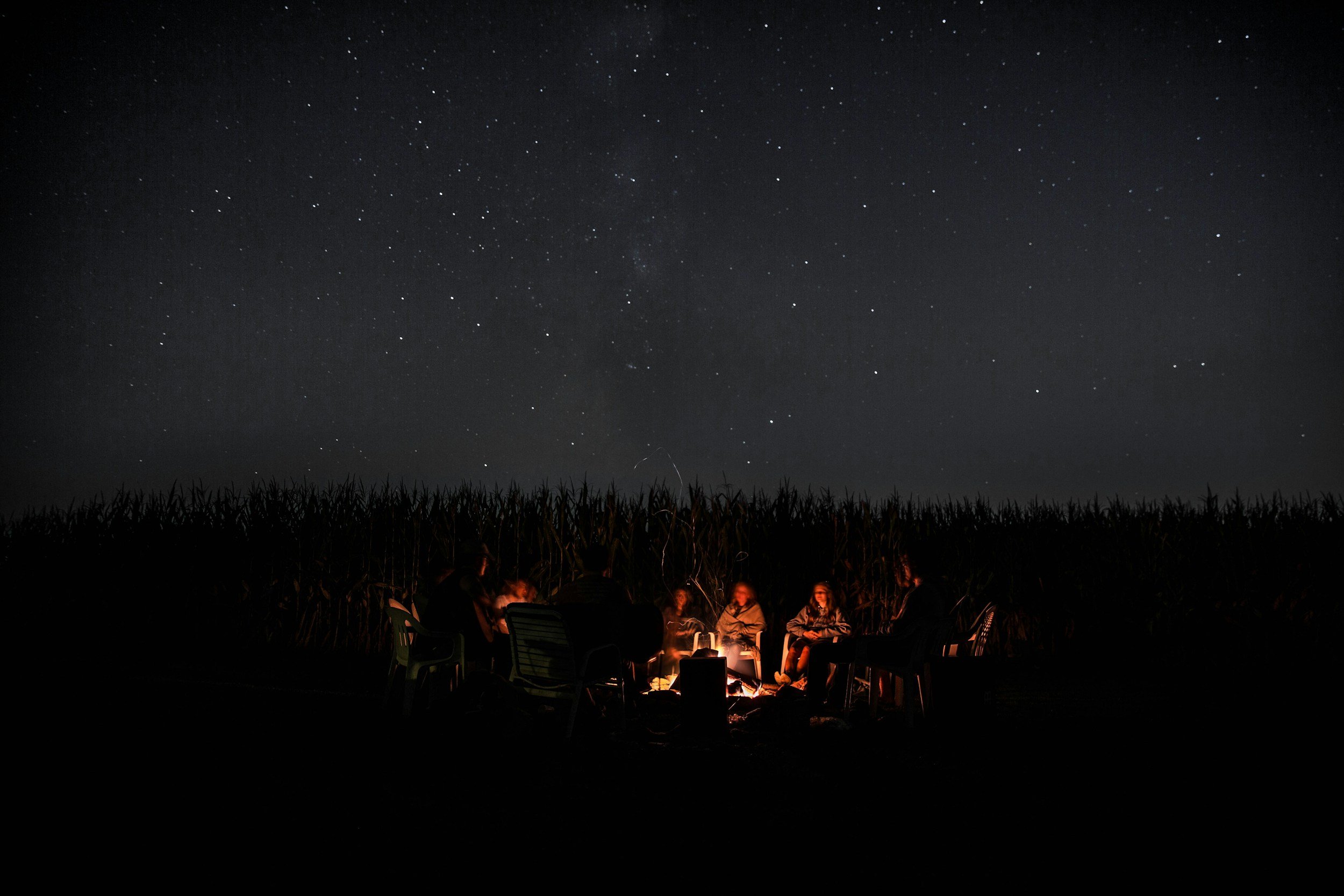
The sensation showed up as a campfire, rooted in my womb with flames dancing through my abdomen and up into my heart space. I felt physically warm, and incredibly alive.
The naming of the experience came as an afterthought: “This must be what anger feels like!”
For several minutes I sat in silence with that fire, as anger made itself known to me, while my practice partners quietly sat with me, witnessing me. When I asked the anger what it needed, what I heard was that it simply wanted me to allow it to be there.
That two men were my practice partners seems significant. Men are socialized to embody their anger (though granted little permission to express any other emotions) and I wonder if these two men possessed a muscle-memory level of comfort with anger that encouraged my own to show up.
To sit with my own anger, without fearing it, wanting to change it, or act on it prematurely was a sacred initiation, and a radical departure from a lifetime of pretending it wasn’t there, or telling it that it wasn’t welcome.
This befriending and witnessing experience provided me a reference point of what anger feels like in my body. Since then, I notice anger faster and take its messages seriously. Often, in real time, I ask the part of me that is feeling angry why it feels that way, and what it needs, and hear valuable information about what steps are needed to address the issue that’s causing the part to feel angry.
That’s not to say I do this perfectly or address every situation with impeccable self-advocacy and miraculous results.
But this new sense of agency and access to my full range of emotions has changed the course of my life. Where once I regularly dismissed how I felt, attempted to live outside my zone of tolerance, and burned out in exhaustion and resentment, now I honor the wisdom of my parts and take seriously their guidance as a holy form of GPS, helping me to navigate life according to my values and within my capacity.

***
IFS for Burnout Recovery
Often autistic people in burnout want a quick list of things to do to get out of burnout, and those lists can be helpful in a pinch. But I’ve found that a more effective approach is to take the time to hear from our parts about what’s true for them. Our parts have valuable information about what our needs are, and what needs aren’t getting met.
Sustainable burnout recovery can thus be aided by compassionately listening to what our parts have been carrying.
When we get to know the parts of us that are burdened with anger, and witness what that anger needs to say, we hear wisdom about what’s happening externally or internally that does not feel acceptable to our system.
And then, from our full adult Self, we can speak for our parts and advocate for these needs to be met.
As I work with my parts, my job becomes to listen to my anger, and to take action on its behalf from a grounded place, where I speak for it, rather than from it.
Because the truth is, despite inner attunement to my anger, the external world remains a place where women’s anger isn’t welcome. If I were to walk around raging to others the way my parts express their rage to me, I doubt I would be making many friends or holding down a job.
But when I speak for my anger, in a way that invites others to take me in, I become more influential, and increase the chances of my needs being met.
What has really made the difference for me in recovering from burnout is becoming a more authentic, assertive person. But in order to become my own advocate, I first needed to rescue my anger from exile.
***
The Big Picture
That I was over 40 years old when I first learned what anger feels like helped me to better understand some disturbing dynamics about how our society operates.
In patriarchal systems, boys are socialized to believe that the only acceptable emotion to show is anger, and girls are socialized to believe that anger is not allowed.
This is a tragic setup where no one is given permission to embody the full range of their humanity, and the cost is enormous.
In When the Body Says No, Gabor Mate writes about women suffering from auto immune conditions such as multiple sclerosis and the through line that they all had in common: none felt they could ever say no.
The energy of their dissonance had to go somewhere. In their cases, it seems to have turned on them, into disease.
If you made your way to this essay, the struggle to say no is likely not news to you. Those of us socialized as girls and women are familiar with the covert and overt pressure to be pleasing, sweet, accommodating, and to give endlessly to others.
And we are well acquainted with what happens when we dare to reject the roles we’ve been slotted into: consequences that can span from being called selfish or difficult (or much, much worse), to being denied opportunities, to being burned at the stake for our failure to fall in line.
Sometimes this punishment comes from men. Frequently, it comes from other women.
Often, it comes from ourselves; and this makes a lot of sense: if we police our own behavior first, maybe it won’t feel so bad when others inevitably do it to us.
So many of us pretend we don’t feel what we feel, and we stuff it all inside. We don’t say no, and we silence the voice that wants to scream.
When we exile parts of ourselves like this according to the patriarchal standards of how a woman should act, our internal patriarch has hijacked our system.
In the short term, doing so might keep us safe.
But when we can’t access our anger - the voice inside that wants to scream NO - it’s like the smoke alarm in our home is disabled. We’re missing the vital siren that alerts us that we’re not okay.
Anger teaches us what our needs are by signaling that our needs aren’t being met. Anger warns us that action is needed to bring us back into integrity with ourselves and other people.
Without it, we might be dying of smoke inhalation before we realize the house is on fire.
Before I had access to anger I responded to mistreatment by compulsively fawning. I tried to give the person who was being mean or disrespectful toward me what I intuited they wanted, so that they would like me more, and then maybe I’d be safe to survive another day.
This strategy depleted me, and didn’t really work, and thus I can safely conclude that being disconnected from anger contributed to my burnout.
But then I reconnected to the parts of me that felt angry. From there, I let go of burdened beliefs that I’m not allowed to get angry, or to have needs. I heard from my parts what boundaries I needed to implement, and then I used the energy of their anger to set and maintain those boundaries. Doing so helped enormously in my burnout recovery.
The way out of externalized patriarchy is enough of us transforming our internalized patriarchs.
The way out of internalized patriarchy is each of us rescuing the parts that are exiled inside ourselves.
The good news is that the curiosity, compassion, and courage required to do so are innate qualities in all of us.